
Bathroom mirrors are exposed to moisture, frequent cleaning, and daily use. Without proper care, they may develop scratches, water stains, chipped edges, or black spots that affect their appearance. Whether you are maintaining a mirror at home or sourcing mirrors for a commercial project, understanding how to prevent bathroom mirror damage can help extend its service life and maintain its appearance.
In this guide, we explain common causes of mirror damage and share practical tips for cleaning, moisture protection, installation, shipping, and long-term maintenance.
Table of Contents
- What Types of Damage Can Affect Bathroom Mirrors?
- What Causes Bathroom Mirror Damage?
- How to Clean a Bathroom Mirror Without Damaging It
- How to Protect Bathroom Mirrors from Moisture
- How to Prevent Damage During Installation
- Daily Bathroom Mirror Maintenance Tips
- How to Prevent Mirror Damage During Shipping
- What Quality Checks Should Buyers Perform?
- How Businesses Can Reduce Mirror Damage
- Conclusion
- Frequently Asked Questions
1. What Types of Damage Can Affect Bathroom Mirrors?
Bathroom mirror damage can occur in different forms. Identifying the problem early helps determine the appropriate maintenance or replacement solution.
Scratches on the Glass Surface
Scratches may occur when abrasive cloths, rough sponges, or unsuitable cleaning tools are used. Dust and small particles trapped between the glass and a cleaning cloth can also scratch the surface.
Black Spots and Mirror Desilvering
Black spots around the edges or across the reflective area may indicate deterioration of the mirror's reflective backing. This issue is different from ordinary surface dirt and generally cannot be removed by regular glass cleaning.
Cracks and Chipped Edges
Cracks and chips can result from impact, excessive pressure, improper handling, or installation errors. Damaged edges should be inspected carefully because further handling may worsen the damage.
Water Stains and Residue
Mineral deposits from water and residue from soap or cleaning products can leave marks on a mirror. If not cleaned appropriately, these deposits may become more difficult to remove.
2. What Causes Bathroom Mirror Damage?
Understanding the main causes of damage is the first step toward effective bathroom mirror maintenance.
- Excessive moisture: Persistent humidity and water accumulation around mirror edges may contribute to deterioration of the reflective backing, particularly when the edges are not adequately protected.
- Incorrect cleaning methods: Abrasive materials and harsh chemicals may damage the mirror or its backing.
- Improper installation: Uneven support, excessive pressure, or unsuitable mounting hardware can increase the risk of cracks and breakage.
- Physical impact: Contact with hard objects may chip the edges or crack the glass.
- Poor storage and transportation: Inadequate packaging, vibration, and improper handling can cause damage before the mirror reaches its final location.
3. How to Clean a Bathroom Mirror Without Damaging It
Correct cleaning habits help maintain a clear mirror surface while reducing the risk of scratches and residue.
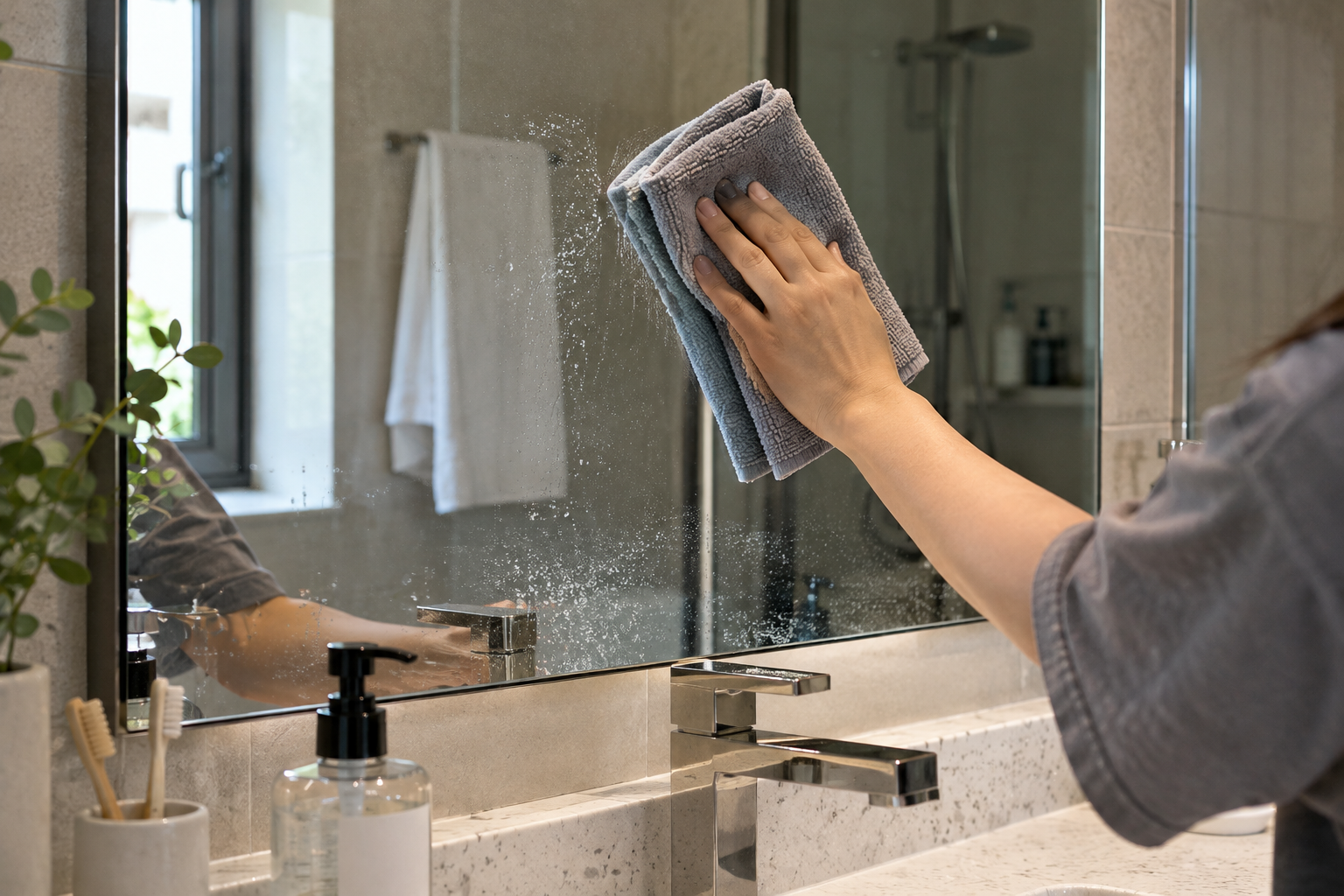
Use a Soft Microfiber Cloth
Choose a clean, soft microfiber cloth instead of abrasive pads or rough materials. Remove loose dust before wiping to reduce the risk of scratching the glass.
Choose a Suitable Glass Cleaner
Use a cleaner suitable for mirrors and follow the product instructions. Avoid applying excessive amounts of liquid directly to the mirror, especially near the edges, where liquid may reach the reflective backing.
Wipe Gently and Dry the Edges
Clean the glass with gentle, even movements. After cleaning, remove remaining moisture and pay attention to the lower edges and corners where water may collect.
Avoid Harsh Chemicals and Abrasive Tools
Do not use rough scouring pads, abrasive powders, or chemicals that are not recommended for mirror surfaces. When in doubt, test a suitable cleaner on a small, inconspicuous area according to the manufacturer's instructions.
4. How to Protect Bathroom Mirrors from Moisture
Moisture control is particularly important in bathrooms, where warm showers and limited ventilation can create persistent humidity.
Improve Bathroom Ventilation
Use an exhaust fan or open a window when appropriate to help remove excess humidity. Better ventilation helps the room dry more quickly after bathing.
Keep Water Away from Mirror Edges
Wipe away water that collects around the bottom edge or corners of the mirror. Avoid allowing water to remain trapped between the mirror and the wall.
Inspect the Mounting Area
Periodically check the mirror's edges and surrounding wall for signs of persistent moisture. If the mirror is installed near a sink or shower, ensure that the installation is suitable for the environment and follows the manufacturer's guidance.
Understand the Limits of Cleaning
Surface water stains may be removable with appropriate cleaning. However, black spots caused by deterioration of the reflective backing are a different issue and usually cannot be corrected through ordinary cleaning.
5. How to Prevent Damage During Installation
Proper installation helps reduce the risk of cracks, chipped edges, and stress on the glass.
- Measure carefully: Confirm the mirror dimensions and mounting position before installation.
- Handle the mirror safely: Use appropriate protective equipment and avoid striking or dragging the glass against hard surfaces.
- Use suitable mounting hardware: Select hardware and installation methods that match the mirror's size, weight, and design.
- Provide even support: Avoid uneven pressure or mounting conditions that may place stress on the glass.
- Follow manufacturer instructions: Use the recommended installation procedure, particularly for large, heavy, or custom mirrors.
For large mirrors or commercial projects, professional installation is recommended to help reduce handling risks and ensure appropriate support.
6. Daily Bathroom Mirror Maintenance Tips
A simple maintenance routine can help keep bathroom mirrors clean and allow potential problems to be identified early.
- Wipe away water droplets after use when necessary.
- Clean the mirror regularly with a soft microfiber cloth and a suitable cleaner.
- Avoid spraying excessive liquid near the edges and backing.
- Check for new scratches, cracks, chipped edges, or black spots.
- Keep bathroom ventilation working properly.
- Follow the manufacturer's care instructions for the specific mirror.
Choosing a mirror that suits the installation environment is also important. Explore the ZW Mirrors mirror collection to discover options for residential bathrooms, hospitality spaces, and commercial projects.
7. How to Prevent Mirror Damage During Shipping
For manufacturers, distributors, and project buyers, preventing damage during transportation is an important part of product quality management.
Use Protective Packaging
Mirrors should be packed with suitable protective materials to reduce the risk of impact, abrasion, and movement during transit. Packaging should be appropriate for the mirror's dimensions, weight, and shape.
Secure the Mirror During Transportation
Packages should be arranged and secured to minimize movement and contact with other goods. Handling instructions should be communicated clearly to the relevant logistics personnel.
Inspect Products Upon Arrival
Check the packaging for signs of impact or damage before unpacking. After unpacking, inspect the glass surface, corners, edges, and reflective appearance. Document any visible damage and report it according to the supplier's or carrier's procedures.
8. What Quality Checks Should Buyers Perform?
Buyers sourcing bathroom mirrors for residential, hospitality, or commercial projects should establish clear inspection criteria before accepting a shipment.
- Surface appearance: Check for visible scratches, stains, cracks, or other surface defects.
- Edges and corners: Inspect for chips, cracks, and signs of impact.
- Reflective appearance: Look for visible black spots, uneven reflection, or other abnormalities.
- Dimensions and specifications: Verify the delivered products against the approved order and drawings.
- Packaging condition: Check for damage that may indicate handling or transportation issues.
- Documentation: Confirm that product specifications and inspection requirements match the purchase agreement.
Inspection requirements should be agreed upon with the supplier before production or shipment, especially for large-volume orders and custom mirror projects.
9. How Businesses Can Reduce Mirror Damage
Businesses can reduce avoidable damage by managing product quality throughout sourcing, storage, installation, and delivery.
For distributors, contractors, and hospitality operators, useful practices include:
- Defining product specifications and acceptable quality standards before ordering.
- Confirming packaging and handling requirements with the supplier.
- Providing suitable storage conditions before installation.
- Using qualified installers for large or custom mirror projects.
- Creating a documented process for inspecting and reporting damaged products.
Consistent procedures help businesses identify problems earlier, reduce avoidable handling risks, and maintain more reliable project delivery.
10. Conclusion
Preventing bathroom mirror damage starts with proper cleaning, moisture control, careful installation, and regular inspection. For businesses, suitable packaging, transportation procedures, and quality checks are also important for reducing damage before products reach the customer.
By following these practical measures, homeowners and commercial buyers can help maintain the appearance of bathroom mirrors and make more informed decisions when selecting mirror products.
Let's Talk About Your Mirror Project
Looking for a specific mirror size, shape, design, or project solution? Share your requirements with our team and let's explore the right option for your market.
11. Frequently Asked Questions
Why do black spots appear on bathroom mirrors?
Black spots may occur when the mirror's reflective backing deteriorates. Moisture exposure and damage around the edges can contribute to this problem. Black spots caused by backing deterioration generally cannot be removed with ordinary glass cleaner.
Can black spots on a bathroom mirror be cleaned off?
If the marks are on the glass surface, suitable cleaning may remove them. If they are caused by deterioration of the reflective backing, ordinary cleaning will not restore the affected area.
What is the safest way to clean a bathroom mirror?
Use a clean microfiber cloth and a suitable mirror cleaner. Avoid abrasive materials, excessive liquid near the edges, and chemicals that are not recommended by the manufacturer.
How can I protect a bathroom mirror from moisture?
Improve bathroom ventilation, wipe away standing water, and prevent moisture from collecting around the mirror's edges. Follow the manufacturer's installation and maintenance recommendations.
How can businesses prevent mirror damage during shipping?
Use packaging appropriate for the product, secure the shipment against movement, communicate handling instructions, and inspect the mirror promptly after delivery.