
Starting a bathroom mirror distribution business requires a clear understanding of the target market, reliable manufacturing partners, and an effective sales strategy. For importers, wholesalers, and retailers, success depends on selecting suitable products, building a strong customer base, and managing distribution costs.
Whether you plan to supply bathroom showrooms, contractors, interior designers, or commercial projects, a structured market entry strategy can help you establish your business and develop long-term B2B relationships. The strongest starting point is to validate demand, choose a focused product range, calculate the full cost of supply, and test your sales process before committing to a large inventory.
This guide explains how to move from market research to supplier selection, pricing, customer acquisition, and repeat orders—with practical checks to use before investing.
Table of Contents
- Understanding the Bathroom Mirror Distribution Market
- Identifying Target Customers
- Selecting the Right Bathroom Mirror Products
- Finding Reliable Bathroom Mirror Manufacturers
- Building a Competitive Pricing Strategy
- Customer Acquisition Strategies
- Choosing the Right Sales Channels
- Managing Inventory and Customer Relationships
- Sourcing Bathroom Mirrors from ZW Mirrors
- Bathroom Mirror Distribution Startup Checklist
- Frequently Asked Questions
- Conclusion
Understanding the Bathroom Mirror Distribution Market
A bathroom mirror distributor sources products from manufacturers and supplies them to businesses or end customers. Depending on the business model, distributors may focus on wholesale orders, retail supply, construction projects, or online sales.
Before entering the market, research local demand, competitor offerings, purchasing behavior, and the types of customers you want to serve. Consider whether your market has stronger demand for standard bathroom mirrors, LED models, decorative designs, or project-specific products.
Important factors to evaluate include:
- Market demand: Identify product categories that match local construction, renovation, and interior design needs.
- Competition: Review competitors' product ranges, pricing, delivery services, and customer support.
- Startup costs: Estimate product purchases, shipping, storage, marketing, and operating expenses.
- Market requirements: Research applicable import rules, product standards, and documentation requirements.
Use this research to define your business positioning and select a distribution model that matches your resources. Starting with a focused market segment can make it easier to manage costs and understand customer needs.
A practical market-entry test: speak with prospective buyers before placing a bulk order. Ask which mirror styles sell most often, what dimensions and features they request, what problems they experience with current suppliers, and what information they need before approving a new vendor. Record repeated patterns rather than relying on a single buyer's opinion.
Identifying Target Customers
Different customer groups have different purchasing priorities. Identifying your ideal buyers helps you choose suitable products, prepare relevant sales materials, and focus your marketing efforts.
- Bathroom showrooms and retailers: Need attractive products that fit their store assortment and customer preferences.
- Wholesalers and resellers: Look for dependable supply, competitive purchasing terms, and products suitable for repeat orders.
- Contractors and builders: Require products that meet project specifications and delivery schedules.
- Interior designers: Seek mirror styles and dimensions that complement specific design concepts.
- Hotels and property developers: May need consistent products for multiple rooms or properties.
- Online retailers: Need accurate product information, suitable packaging, and reliable fulfillment.
For a new distributor, concentrating on one or two customer groups can help simplify sales planning. For example, supplying bathroom retailers requires a different product and service strategy from managing bulk orders for construction projects.
Once you understand your buyers' needs, you can develop a more targeted product range and sales approach. Create a buyer profile for each priority segment, including typical order size, purchase frequency, decision-maker, buying criteria, and delivery requirements.
| Buyer segment | Likely priority | Useful sales material |
|---|---|---|
| Retailers and showrooms | Assortment, resale potential, replenishment | Catalog, dimensions, wholesale terms |
| Contractors and developers | Specifications, quantity, delivery | Technical sheets, schedule, quotation |
| Interior designers | Appearance, dimensions, coordination | Product photos, finish options, samples |
| Online sellers | Accurate listings, packaging, fulfillment | Image set, specifications, packaging details |
Selecting the Right Bathroom Mirror Products
Product selection influences your purchasing costs, target customers, storage requirements, and sales opportunities. A focused assortment can help a new distributor manage investment while offering products that meet market demand.
Potential product categories include:
- LED bathroom mirrors: Suitable for modern residential bathrooms, hotels, and contemporary interior projects.
- Framed bathroom mirrors: Offer decorative options for different interior styles.
- Frameless bathroom mirrors: Provide a minimalist appearance that suits many bathroom designs.
- Custom-sized mirrors: Help meet specific project dimensions and design requirements.
- Feature-enhanced mirrors: Depending on the model, some products may include touch controls, dimming, or other functions.
Before selecting products, evaluate dimensions, materials, lighting configurations, installation requirements, packaging, and applicable market standards. Confirm which features are available for each model instead of assuming that every product offers the same specifications.
It is also useful to compare samples and technical information before committing to a large order. Your product assortment should reflect customer demand, price expectations, and the supplier's capabilities.
Keep the first assortment manageable. Select a small test range with a clear purpose for each SKU—for example, a core design, a feature-rich option, and a model for a specific customer or project type. Define dimensions, finish, lighting or electrical features where applicable, packaging, and target landed cost for each item.
Before confirming a model, check whether its specifications are easy to explain and whether installation instructions and warranty information can be obtained. For LED or electrically powered mirrors, verify the certifications and electrical requirements applicable in the destination market with the supplier and relevant local authorities.

Finding Reliable Bathroom Mirror Manufacturers
Your manufacturing partners play an important role in product quality, supply continuity, and customer satisfaction. A supplier should be evaluated on more than its quoted unit price.
When comparing manufacturers, review the following factors:
- Product quality: Examine samples, finishing, specifications, and quality control procedures.
- Production capabilities: Determine whether the manufacturer can handle your expected order volume and product requirements.
- Product range: Check whether available models match your target market.
- Communication: Ensure product details, order changes, and delivery expectations can be discussed clearly.
- Packaging: Understand how mirrors are protected against scratches, impact, and transportation damage.
- Order terms: Clarify minimum order quantities, payment terms, lead times, and procedures for handling defective products.
Before placing an order, confirm the specifications, quantities, delivery arrangements, and responsibilities of each party in writing. For international sourcing, account for freight costs, import duties, customs procedures, and the time required for transportation.
Comparing multiple suppliers can help you evaluate the overall value of each option and identify a partner that fits your business requirements.
Use a supplier scorecard: compare product quality, communication, production capacity, documentation, packaging, lead time, and total delivered cost. Request samples or a small trial order where practical, and document agreed inspection criteria. A low unit price is not necessarily the best offer if specifications are unclear or damage claims are costly.
For international orders, confirm shipping responsibilities, insurance, customs documentation, and the process for reporting shortages or transit damage in writing.
Building a Competitive Pricing Strategy
A sustainable pricing strategy should cover the full cost of sourcing and distributing each product. Using only the manufacturer's quotation to set your selling price may leave important expenses unaccounted for.
Calculate the landed cost by considering:
- Product purchase price.
- International freight and insurance, where applicable.
- Import duties, taxes, and customs-related charges.
- Warehousing, handling, and local delivery.
- Marketing, administration, and sales expenses.
- Other foreseeable costs, including product damage and returns.
After estimating the total cost, determine a selling price that reflects your target gross margin and the prices customers are willing to pay. Keep markup and gross margin distinct: markup compares profit with cost, while gross margin compares profit with selling price.
Gross margin formula: (Selling price − Cost of goods sold) ÷ Selling price × 100.
For example, if a mirror's landed cost is $100 and the selling price is $150, gross profit is $50 and gross margin is approximately 33.3%. This is before operating expenses not included in landed cost, such as salaries, rent, marketing, financing, and administration.
To calculate a price from a target gross margin, use Selling price = Landed cost ÷ (1 − Target gross margin). If landed cost is $100 and target gross margin is 30%, the calculated selling price is about $142.86. This is a calculation, not proof that the market will accept the price; compare it with competitor offers and buyer feedback.
Distributors may offer different pricing structures for retail customers, wholesale buyers, and large project orders. Any volume discount should be based on realistic cost savings and should preserve an acceptable profit margin.
Review your pricing regularly as supplier costs, freight rates, competition, and customer demand change. For every quotation, document the currency, validity period, quantity, delivery terms, taxes or duties included, and any costs that remain the buyer's responsibility.
Customer Acquisition Strategies
Customer acquisition is essential to building a distribution business. A consistent approach combining direct sales, digital marketing, and industry networking can help generate qualified leads.
Direct B2B Outreach
Build a list of potential customers, such as bathroom retailers, wholesalers, contractors, interior designers, and procurement teams. Introduce your company with a concise product catalog, relevant specifications, and clear contact details.
Tailor your communication to each buyer's business. Retailers may prioritize product variety and resale margins, while project buyers may focus on specifications, quantities, and delivery schedules.
SEO and Content Marketing
A professional website can help potential customers discover your business through search engines. Create useful pages about bathroom mirror categories, product specifications, applications, and sourcing considerations.
Optimize product pages with descriptive titles, accurate information, relevant internal links, and clear inquiry options. Search engine optimization is a long-term strategy, so track performance over time rather than expecting immediate results.
Social Media and Industry Networking
Use professional social media channels to showcase product designs, manufacturing capabilities, applications, and completed projects where you have permission to share them. Trade shows and industry events can also help you meet prospective buyers and build professional relationships.
Record inquiries, quotations, follow-ups, and sales conversions to identify which acquisition channels bring in valuable customers. A basic lead tracker can include company, buyer type, market, requested models, estimated quantity, quotation date, next follow-up, outcome, and reason for winning or losing the order.
Review the funnel monthly: qualified inquiries, quotations sent, orders won, average order value, gross margin, and repeat orders. This helps distinguish channels that generate attention from channels that generate profitable business.

Choosing the Right Sales Channels
The right sales channels depend on your target customers, available resources, product range, and fulfillment capabilities. Many distributors combine several channels to reach different buyers and diversify their sales opportunities.
Wholesale Distribution
Supplying bathroom showrooms, retailers, and local resellers can support repeat business. This model requires dependable supply, competitive purchasing terms, and consistent communication with business customers.
Project-Based Sales
Working with contractors, designers, hotels, and property developers allows distributors to pursue project orders. These buyers may require specific dimensions, consistent product models, coordinated delivery schedules, and clear technical documentation.
E-commerce and Online Sales
A business website or suitable online marketplace can display your products and generate inquiries from buyers researching suppliers online. Product pages should include accurate specifications, dimensions, photographs, and clear instructions for requesting quotations or placing orders.
Because mirrors are fragile, online distributors should also consider packaging, delivery costs, shipping coverage, and procedures for handling transportation damage.
Direct Sales and Business Partnerships
Direct sales enable distributors to communicate with buyers and provide quotations tailored to their needs. Partnerships with bathroom fixture suppliers, furniture retailers, or interior design firms may also create opportunities for referrals and complementary product offerings.
Evaluate each channel based on acquisition costs, order value, gross margin, repeat purchases, and operational requirements. Prioritize the channels that best fit your business rather than investing equally in every option.
For a new distributor, a sensible test is to choose one primary channel and one supporting channel for an initial period. Set a clear target—such as qualified buyer conversations or quotation requests—then compare the results before expanding the budget or adding another channel.
Managing Inventory and Customer Relationships
Inventory management helps distributors maintain product availability without tying up excessive cash in slow-moving stock. Begin with products that match demonstrated demand, then adjust purchasing decisions based on sales performance.
Practical inventory management measures include:
- Monitor sales volume and reorder frequency by model.
- Account for supplier lead times when planning replenishment.
- Review slow-moving products and avoid unnecessary stock accumulation.
- Inspect incoming products and record any defects or shipping damage.
- Coordinate project orders with suppliers before confirming delivery commitments.
Customer retention is equally important. Provide accurate quotations, communicate delivery updates, respond promptly to questions, and handle complaints professionally. Consistent service can encourage repeat purchases and strengthen relationships with retailers and project buyers.
As the business grows, review sales data, customer feedback, and supplier performance to identify opportunities for improvement. Track inventory by SKU and set reorder points based on expected demand during supplier lead time plus an appropriate safety buffer. The buffer should reflect demand variability and the cost of running out, not a one-size-fits-all rule.
For project orders, confirm specifications and delivery dates with the supplier before promising them to the customer. For stocked products, inspect deliveries and record breakage so recurring issues can be traced to a model, shipment, or packaging method.
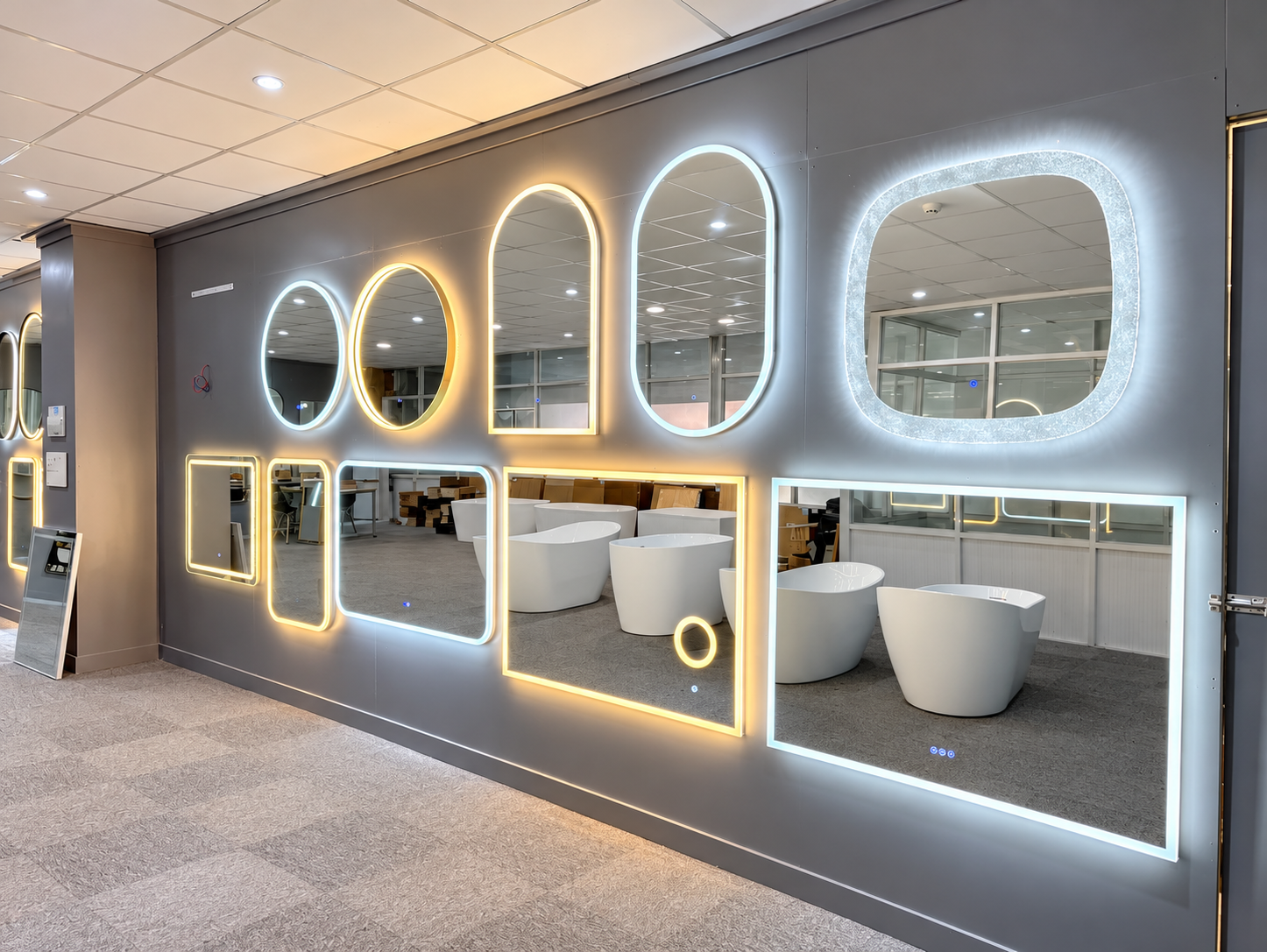
Sourcing Bathroom Mirrors from ZW Mirrors
Choosing a suitable manufacturing partner is an important step in building a bathroom mirror distribution business. Distributors should compare product availability, manufacturing capabilities, quality control, customization options, and order terms against their business requirements.
ZW Mirrors is one supplier prospective distributors can evaluate while researching bathroom mirror sourcing options. Review the available collection, compare models against your target customer requirements, and contact the company to confirm current specifications and sourcing terms.
Before placing an order, confirm the relevant product details, pricing, minimum order requirements, lead times, packaging arrangements, and shipping terms directly with the supplier. Ask for a written quotation and technical information for the exact models you are considering; availability, customization, and order terms should be verified for each request.
Explore the ZW Mirrors bathroom mirror collection to review available products.
Bathroom Mirror Distribution Startup Checklist
Use this checklist to turn market research into a practical first-stage plan:
- Validate demand: speak with prospective buyers and document requested products, price expectations, and current supply problems.
- Choose a customer segment: prioritize one or two groups instead of targeting every buyer at once.
- Define a test assortment: record each model's specifications, target landed cost, and intended buyer.
- Compare suppliers: review samples, quality procedures, capacity, packaging, communication, and written order terms.
- Build a landed-cost sheet: include product, freight, insurance, duties, handling, storage, damage allowance, and other relevant expenses.
- Prepare sales materials: create a catalog or product list with accurate specifications, clear images, quotation details, and contact information.
- Test acquisition channels: contact a defined list of buyers and track inquiries, quotations, orders, and follow-ups.
- Set review points: monitor SKU performance, gross margin, delivery reliability, product damage, and repeat purchases before expanding.
Complete these steps in sequence where possible. The goal is to validate the business model with evidence before increasing inventory or marketing spend.
Frequently Asked Questions
What do I need to start a bathroom mirror distribution business?
You need a defined target market, suitable products, reliable suppliers, a pricing strategy, and a customer acquisition plan. You should also estimate sourcing, shipping, inventory, marketing, and operating costs before investing.
Who are the main customers of bathroom mirror distributors?
Common customers include bathroom showrooms, retailers, wholesalers, contractors, interior designers, online stores, hotels, and property developers.
How can I find reliable bathroom mirror manufacturers?
Research potential manufacturers, compare product samples and specifications, review quality control procedures, and confirm production capacity, lead times, packaging, and order terms before committing to a purchase.
Which bathroom mirrors should a new distributor sell?
Potential categories include LED, framed, frameless, and custom-sized mirrors. The best selection depends on local demand, target customers, competition, and available investment.
Which sales channels should bathroom mirror distributors use?
Wholesale distribution, project-based sales, direct B2B outreach, e-commerce, and business partnerships are potential channels. Choose according to your customer base, costs, margins, and ability to fulfill orders.
How can bathroom mirror distributors improve profitability?
Calculate the full landed cost, price products using a clear margin target, manage inventory carefully, track sales performance, and focus on customer relationships and sales channels that support repeat business.
What is the difference between markup and gross margin?
Markup measures profit as a percentage of cost, while gross margin measures profit as a percentage of the selling price. Use the correct formula when setting prices and compare the result with market expectations.
Should a new distributor place a large first order?
Not automatically. Where practical, validate demand with buyer conversations, samples, or a smaller trial order first. The right order size depends on minimum order requirements, freight economics, available cash, lead time, and evidence of customer demand.
Conclusion
Building a bathroom mirror distribution business requires market research, suitable product selection, reliable manufacturing partners, and a clear customer acquisition strategy. Pricing, sales channels, inventory management, and customer service also influence long-term performance.
By starting with a focused target market, evaluating suppliers carefully, and developing consistent sales processes, distributors can establish a stronger foundation for growth. Regularly reviewing customer demand and business performance can help guide future product and market expansion.
The most important principle is to validate before scaling: confirm what buyers need, calculate the real cost of supplying it, and test whether your chosen channels can generate profitable orders. This disciplined approach can help reduce avoidable inventory and pricing mistakes.
Explore ZW Bathroom Mirrors
Explore our bathroom mirror collection and discuss your sourcing requirements with our team.
Have questions about sourcing? Contact our team