
Choosing a bathroom mirror may seem like a small design decision, but the right mirror can make a big difference in how a bathroom looks and functions. From a compact guest bathroom to a hotel vanity or a large residential development, the mirror should fit the available space, complement the interior, and meet the needs of the people using it.
That is why more project buyers consider custom bathroom mirrors instead of relying entirely on standard sizes. Custom options offer greater flexibility in dimensions, shapes, and selected design features, helping designers, contractors, and property developers create a more cohesive result.
In this guide, we explain when custom bathroom mirrors make sense, how to choose the right design, and what to consider before placing an order.
Table of Contents
- Why Choose Custom Bathroom Mirrors?
- 1. Get the Right Size for Your Bathroom
- 2. Match Your Interior Design
- 3. Choose Features That Fit Your Needs
- 4. Find the Right Mirror for Different Projects
- 5. Custom vs. Standard Bathroom Mirrors
- 6. What to Check Before Ordering
- Explore Mirror Options from Zhiwei
- Frequently Asked Questions
Why Choose Custom Bathroom Mirrors?
Standard bathroom mirrors can be a practical choice when their dimensions and designs suit the space. However, some projects have specific requirements that standard products may not fully meet.
A custom bathroom mirror can offer more flexibility in size, shape, orientation, and selected design details, depending on the manufacturer's capabilities. This is particularly useful when the mirror needs to work with a particular vanity, architectural layout, or interior design concept.
Before deciding, consider three important questions: Does the mirror fit the available space? Does it match the overall design? And does it meet the project's budget, quantity, and delivery requirements?
1. Get the Right Size for Your Bathroom
A mirror should feel proportionate to the vanity and the wall around it. A mirror that is too small may look disconnected from the rest of the bathroom, while one that is too large may interfere with lighting, cabinets, or other fixtures.
For Small Bathrooms
In a compact bathroom, a carefully sized mirror can help the room feel more open and make better use of the available wall space. A vertical mirror may work well where wall width is limited, while a wider design may suit a narrow vanity.
For Double Vanities
Bathrooms with double sinks may use one wide mirror or two separate mirrors. The choice depends on the vanity layout, lighting placement, personal preference, and the look the designer wants to achieve.
For Hotels and Large Projects
Hotel rooms, apartments, and residential developments often follow defined layouts. Specifying mirror dimensions early can help coordinate the mirror with the vanity, wall finishes, lighting, and installation details.
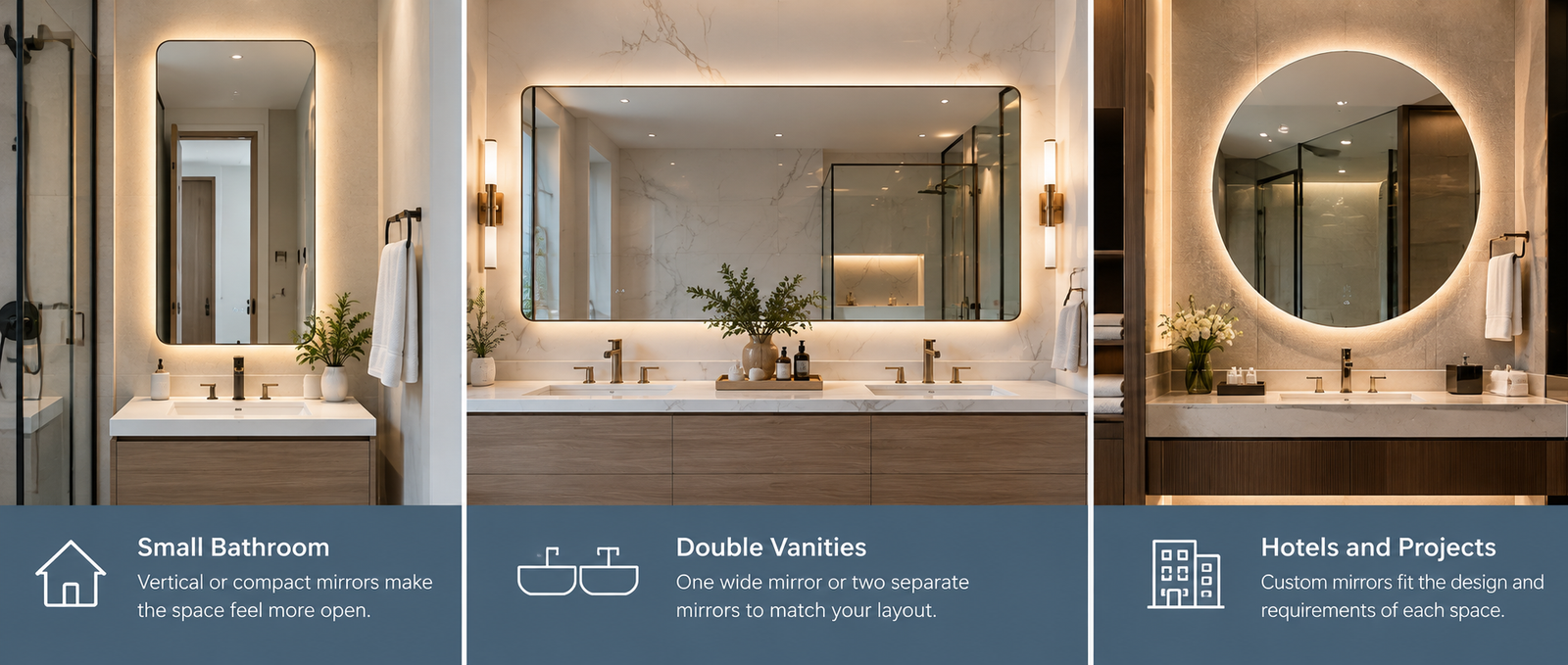
Before ordering, measure the available wall area and confirm the position of faucets, lights, cabinets, and mounting hardware. Accurate measurements help reduce unnecessary adjustments during installation.
2. Match Your Interior Design
A bathroom mirror is both a functional item and a visible part of the interior. Its shape, frame, and proportions can influence the overall atmosphere of the room.
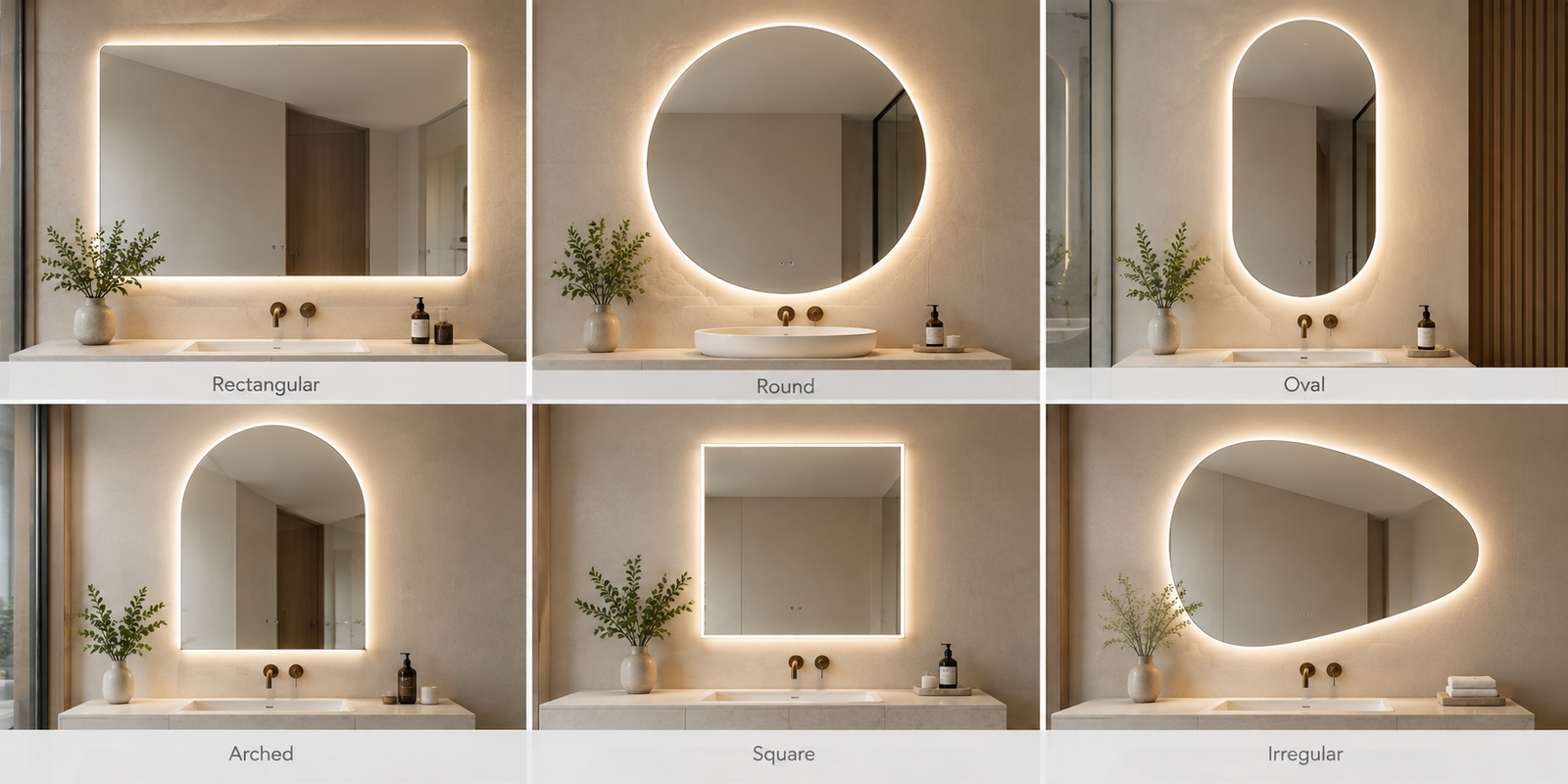
Round and Oval Mirrors
Round and oval mirrors can soften interiors with straight lines, rectangular tiles, and angular vanities. They are often considered for contemporary residential bathrooms and hospitality spaces.
Rectangular Mirrors
Rectangular mirrors are versatile and can work well above single or double vanities. Their clean lines suit many modern, minimalist, and transitional interiors.
Framed and Frameless Mirrors
Framed mirrors can introduce a decorative accent, while frameless designs create a simpler, more understated appearance. The best option depends on the finishes, fixtures, and visual style of the project.
Explore the ZW Mirrors collection for design inspiration.
3. Choose Features That Fit Your Needs
Not every bathroom project needs the same mirror features. The right specification depends on how the space will be used, the desired appearance, and the project's technical requirements.
Lighting Options
For bathrooms that need integrated lighting, an illuminated mirror may be worth considering. Before specifying an LED mirror, review its lighting characteristics, dimensions, electrical requirements, installation method, and applicable certifications.
Mounting Orientation
Some mirror designs can be installed horizontally or vertically, while others have a fixed orientation. Confirm the intended mounting direction and available mounting options before finalizing the order.
Edges, Frames, and Finishes
Edge treatments and frame details can affect the mirror's appearance and compatibility with the surrounding interior. Confirm which options are available for the selected model rather than assuming every finish or configuration can be customized.
A useful approach is to separate essential requirements from optional upgrades. This helps the project team focus on the features that matter most instead of paying for specifications the space does not need.
4. Find the Right Mirror for Different Projects
Residential Bathrooms
For homeowners and residential designers, custom mirrors can help accommodate unusual wall dimensions, specific vanity styles, or a particular interior concept.
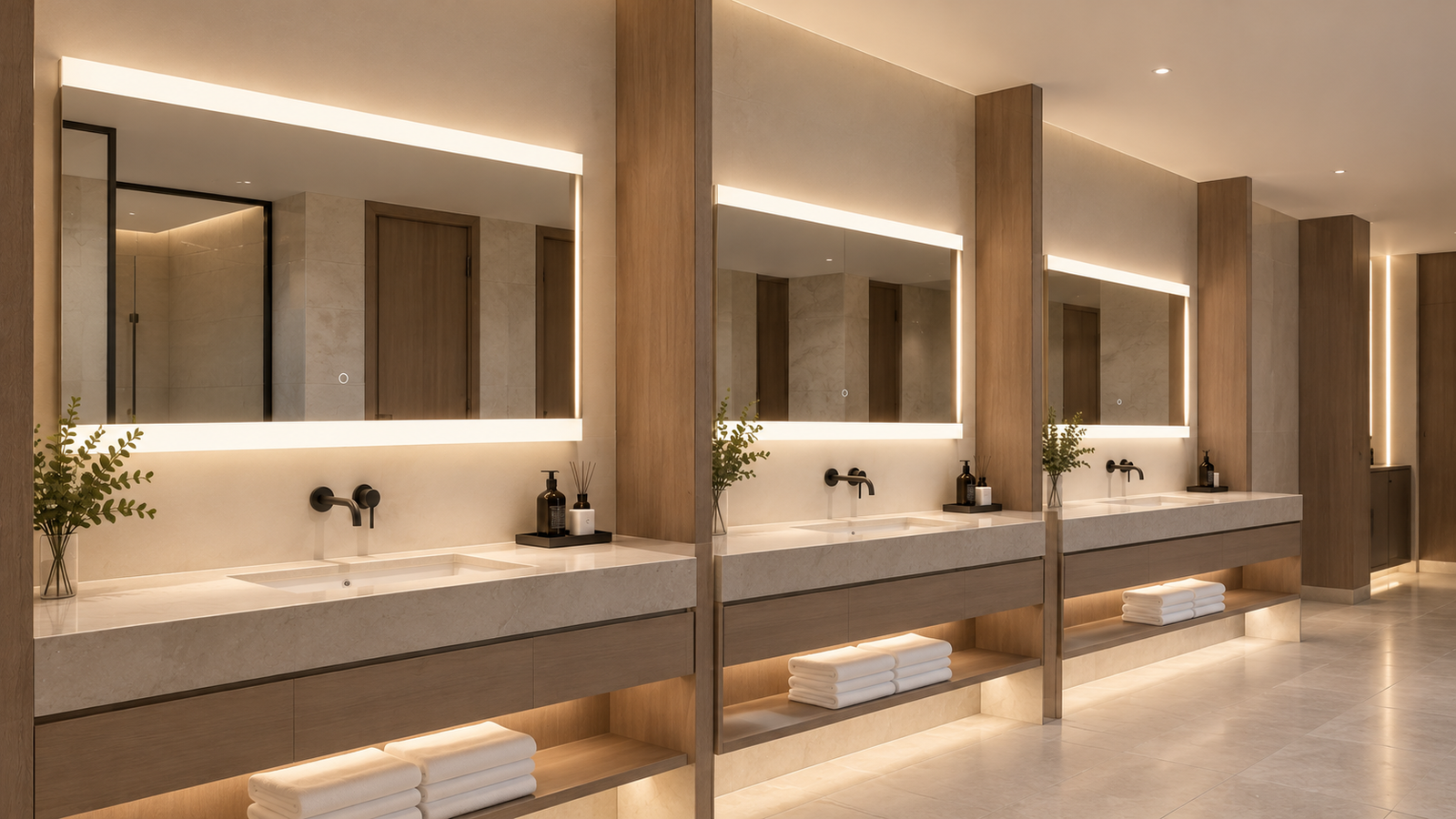
Hotels and Hospitality Projects
Hotels may need a consistent mirror appearance across guest rooms while working within different bathroom layouts. Defining dimensions and product specifications in advance helps coordinate procurement and installation.
Apartments and Residential Developments
For multi-unit developments, the project team may need repeatable specifications across many bathrooms. Approved drawings, documented dimensions, and clear inspection criteria can help maintain consistency between orders.
Commercial Interiors and Renovations
Offices, retail spaces, and renovation projects may have distinctive installation requirements. The mirror should be selected according to the available wall space, intended use, mounting conditions, and applicable safety requirements.
5. Custom vs. Standard Bathroom Mirrors
Custom mirrors are not automatically the best choice for every project. Standard mirrors may be more practical when an available size and design already meet the requirements.
| Factor | Custom Mirrors | Standard Mirrors |
|---|---|---|
| Size and shape | More flexibility, subject to supplier capabilities | Predetermined options |
| Design matching | Can be specified for a particular project | Works when an existing design is suitable |
| Lead time | May require additional production time | May be faster if in stock |
| Cost | Depends on specifications, quantity, and production requirements | Depends on the selected model and availability |
| Best suited for | Specific dimensions or project requirements | Straightforward needs and standard layouts |
The practical choice is the one that meets the project's design and technical requirements while staying within the available budget and schedule.
6. What to Check Before Ordering Custom Bathroom Mirrors
Before requesting a quotation, prepare the information your supplier needs to assess the project accurately.
- Dimensions: Provide the required width, height, and quantity.
- Design: Include the preferred shape, frame style, edge treatment, and reference images.
- Features: Identify any lighting or other functional requirements.
- Installation: Explain the intended location and mounting conditions.
- Budget and quantity: Share the estimated order volume and target budget if available.
- Timeline: State the target delivery date and destination.
- Quality requirements: Confirm specifications, inspection criteria, packaging, and handling expectations.
For larger orders, request confirmation of the final specifications before production begins. This can help reduce misunderstandings and avoidable changes later in the project.
Explore Mirror Options from Zhiwei
From contemporary designs to project-specific requirements, choosing the right mirror starts with understanding your space, design preferences, and intended use.
Explore the ZW Mirrors product collection to discover styles for different bathroom and interior projects.
Conclusion
Custom bathroom mirrors offer greater flexibility in size, design, and selected features, making them worth considering for residential, hospitality, and commercial projects.
Before making a decision, evaluate your project requirements, budget, technical specifications, and production timeline to find a suitable solution.
Let's Discuss Your Mirror Project
Share your preferred mirror dimensions, design, quantity, and project timeline with our team to explore suitable options.
FAQ
Are custom bathroom mirrors worth it?
They can be worth considering when standard sizes or designs do not meet the project's requirements. The decision depends on the required dimensions, design, budget, order quantity, and timeline.
What can be customized in a bathroom mirror?
Depending on the supplier and model, options may include dimensions, shapes, frame styles, edge treatments, orientation, and selected lighting features. Confirm the available options before ordering.
Are custom bathroom mirrors suitable for hotels?
They can be suitable for hotel projects that require defined dimensions or a consistent appearance across multiple rooms. Confirm specifications, quantities, delivery schedules, and installation requirements in advance.
Do custom bathroom mirrors cost more than standard mirrors?
Pricing depends on the mirror specifications, design complexity, quantity, and production requirements. Request a quotation based on the actual project details to compare options fairly.
What should I send when requesting a custom mirror quotation?
Share the dimensions, preferred design, quantity, intended application, required features, delivery destination, and target delivery date. Drawings or reference images can help clarify the requirements.