
Developing a private label LED bathroom mirror collection can help your brand offer a more consistent product range instead of selling unrelated mirror models. The goal is to bring together designs, specifications, and product information that reflect your brand positioning and meet the needs of your target customers.
For bathroom brands, wholesalers, distributors, retailers, and project suppliers, building a collection involves more than choosing attractive mirrors. You need to understand market demand, define a practical product range, confirm customization options, evaluate suppliers, and plan costs before placing a bulk order.
This guide explains how to plan a private label LED bathroom mirror collection, what to confirm with a supplier, and how to distinguish brand customization from genuine design exclusivity.
Table of Contents
- Define Your Brand Positioning
- Research Your Target Market
- Plan a Cohesive Mirror Collection
- Choose the Right Customization Options
- Evaluate Potential Suppliers
- Set Clear Quality Requirements
- Plan Costs and Minimum Order Quantities
- Prepare for Launch
- Explore ZW Vietnam Mirror Designs
- Frequently Asked Questions
1. How Should You Define Your Brand Positioning?
Before choosing products, decide who your collection is for and how you want customers to perceive your brand. This decision influences the mirror shapes, size range, feature selection, target price, packaging, and sales materials you will need.
For example, a retailer serving contemporary homes may prioritize versatile designs, while a project supplier may need consistent specifications across multiple units. A premium-focused brand may place greater emphasis on distinctive styling and coordinated presentation. These are different business needs, so avoid building a collection around appearance alone.
| Target Segment | Potential Priorities |
|---|---|
| Retailers and showrooms | A balanced choice of shapes, sizes, clear product images, and easy-to-compare specifications |
| Wholesalers and distributors | A manageable model range, clear ordering terms, reliable product information, and suitable packaging |
| Interior designers | Design consistency, dimensions, lighting details, and installation information |
| Project suppliers | Consistent specifications, quantity planning, documentation, and delivery coordination |
Define What Makes Your Brand Recognizable
Your collection should have a clear design direction. This could be a consistent approach to mirror geometry, proportions, lighting appearance, frame style, or the way products are grouped and presented. The objective is to make the range feel intentional rather than like a list of unrelated items.
Write a short product brief before contacting suppliers. Include your target customers, target market, expected price position, preferred styles, and the product requirements that matter most.
2. How Can Market Research Guide Your Collection?
Market research helps you decide which models to include and which features deserve investment. Review competing products, customer questions, showroom assortments, online search results, and feedback from distributors or project buyers in your target market.
Focus your research on questions such as:
- Which mirror shapes and dimensions appear most relevant to your customers?
- Do customers prefer front-lit, backlit, or other lighting configurations?
- Which controls or functions are requested most often?
- What price ranges are common among competing products?
- What complaints or product gaps appear in customer reviews?
- Which specifications or documents do buyers need before ordering?
Look for Opportunities, Not Just Popular Designs
Competitor research can help you understand market expectations, but copying another company's design or branding can create intellectual property concerns. Look instead for a gap your collection could address, such as a more coordinated selection of shapes, clearer product specifications, or a range tailored to a particular customer segment.
Separate Essential Features from Optional Features
More functions do not automatically make a mirror more suitable for your market. Ask prospective customers which features influence their purchasing decisions and which they consider unnecessary. Then confirm with suppliers whether the requested options are available for the specific models under consideration.
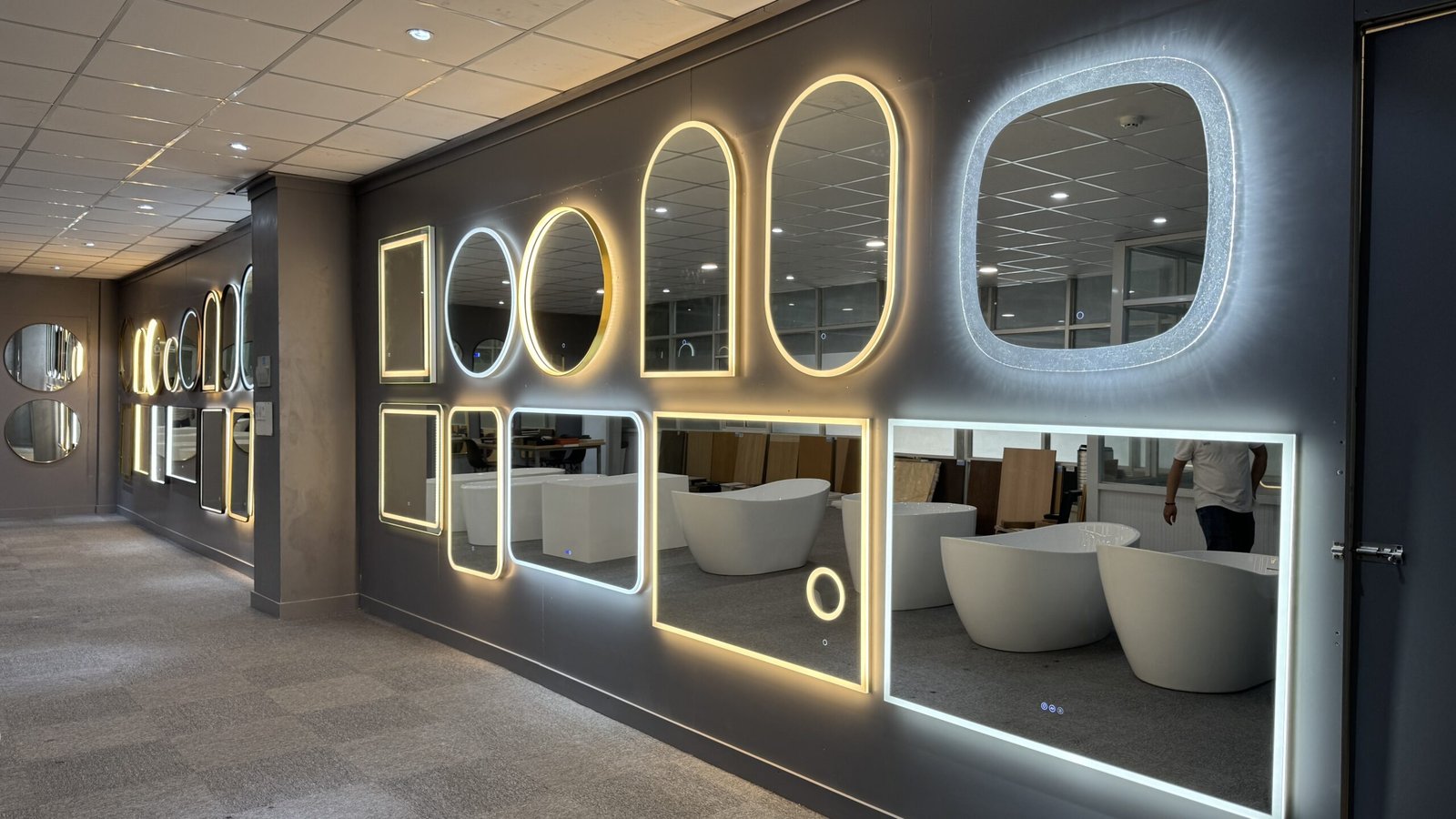
3. How Do You Build a Cohesive LED Bathroom Mirror Collection?
A useful collection balances variety with consistency. It should offer enough choice for your target customers without creating unnecessary complexity in purchasing, inventory, product documentation, and marketing.
Choose a Core Design Direction
Start with a small set of design principles. For example, a contemporary range might combine rounded rectangular, oval, and circular mirrors with a consistent approach to lighting and presentation. The exact combination should follow your market research and the models a supplier can actually provide.
Group Models by Purpose
| Product Group | Role in the Collection | What to Consider |
|---|---|---|
| Core models | Represent the main design direction | Customer appeal, practical dimensions, and target price |
| Distinctive models | Give the range a recognizable design feature | Demand, production feasibility, and any additional cost |
| Compact models | Serve smaller bathrooms or specific layouts | Proportions, mounting requirements, and available space |
| Project-oriented models | Support repeat orders with defined specifications | Consistency, documentation, quantities, and delivery planning |
This is a planning framework, not a fixed formula. The number of models should reflect your budget, supplier terms, expected demand, and sales channels.
Create a Product Specification Matrix
Before approving the range, create a matrix for every model. Record the model name or SKU, dimensions, shape, lighting configuration, controls, functions, materials or finishes where applicable, packaging requirements, and any market-specific documentation. Mark unconfirmed details as pending rather than presenting them as established specifications.
Standardize components or specifications only where technically appropriate. A common approach may simplify product management, but it should not override the needs of individual models.
4. Which Customization Options Should You Consider?
Customization may help a brand differentiate its range, but the available options depend on the supplier, the existing model, technical constraints, order quantity, and development budget. Confirm feasibility before using any proposed feature in marketing materials or customer quotations.
Potential areas to discuss with a supplier include:
- Mirror shape and dimensions
- Framed or frameless appearance
- Front-lit or backlit configuration
- LED color temperature options
- Touch or sensor controls, where available
- Dimming or other functions, where available
- Branding, labels, and packaging
- Product documentation and sales materials
Customize Existing Models or Develop a New Design?
| Approach | Potential Benefit | Confirm Before Proceeding |
|---|---|---|
| Customize an existing model | May require less development work if the requested changes are supported | Available modifications, sample charges, MOQ, cost, and design rights |
| Develop a new design | May create stronger differentiation for the brand | Technical feasibility, development timeline, ownership, tooling, and total cost |
Clarify the Meaning of “Exclusive”
Private label generally means selling a product under your own brand. It does not automatically mean that the underlying mirror design is exclusive to your company.
If exclusivity is important, define in writing which design elements are covered, the relevant territory and sales channels, the duration of the arrangement, ownership of drawings or artwork, and whether the supplier can sell the same or similar design to other buyers. Seek qualified legal advice for agreements where design rights or exclusivity are commercially important.
5. How Should You Evaluate a Mirror Supplier?
A supplier should be able to explain which requirements can be met, which need further development, and which cannot be offered for the selected model. Evaluate the supplier using written specifications and commercial terms rather than relying on product images alone.
| Evaluation Area | Questions to Ask |
|---|---|
| Product range | Which available models fit the intended collection? |
| Customization | Which changes are technically available for each model? |
| Samples | Can samples be reviewed and approved before bulk production? |
| Commercial terms | What are the MOQ, sample charges, unit price, payment terms, and lead time? |
| Quality process | How will the order be checked against the approved specifications? |
| Packaging | What packaging options and shipping-protection measures are available? |
| Documentation | Can the supplier provide the technical information and supporting documents required for your market? |
Approve a Sample and Record Changes
Where sampling is available, inspect the physical product before bulk production. Check the appearance, dimensions, lighting operation, controls, finish, and other requirements relevant to the model. Record approved changes and keep the final specification as a shared reference for both parties.
Review the ZW Vietnam Bathroom Mirror Collection to see available designs that may be relevant to your product planning. Confirm specific customization options and commercial terms directly with the supplier.
6. How Can You Set Clear Quality Requirements?
Quality expectations should be defined before production, not only after goods arrive. Clear requirements help buyers and suppliers evaluate whether the delivered products match the approved sample and specification.
| Quality Area | Items to Verify |
|---|---|
| Mirror surface | Reflection clarity and visible surface defects |
| Dimensions | Length, width, thickness, and agreed tolerances |
| Edges and finish | Edge processing and conformity with the approved design |
| LED lighting | Operation and consistency with the confirmed specification |
| Electrical components | Specified components, wiring, controls, and applicable safety requirements |
| Assembly and mounting | Component fit, mounting structure, and visible assembly details |
| Packaging | Protection, labels, and conformity with agreed packing requirements |
Match Inspection to the Product and Market
Maintain an approved specification sheet for each model and agree on inspection methods and acceptance criteria where applicable. Electrical standards, labeling, and documentation may differ by destination market, so confirm the requirements for the specific model with qualified parties and request relevant supporting documents from the supplier.
7. How Should You Plan Costs and Minimum Order Quantities?
A collection can look attractive on paper but become difficult to manage if development costs, order quantities, and inventory requirements are not considered early. Calculate the likely total cost and ask suppliers how minimum order quantities are applied before deciding how many models to launch.
Calculate More Than the Unit Price
Depending on the project, the budget may need to include:
- Sample and product-development charges
- Customization, tooling, or setup costs, where applicable
- Branded packaging, labels, and printed materials
- Freight, insurance, duties, and other import-related costs
- Warehousing and inventory financing
- Product photography, catalog preparation, and marketing
- Inspection, returns, replacements, and after-sales support
Costs vary by product specification, order size, supplier, and destination market. Request itemized quotations where possible and compare the expected landed cost rather than judging offers by unit price alone.
Confirm How MOQ Is Calculated
Ask whether the minimum order quantity applies per model, size, customization, packaging option, or combined order. Also confirm whether sample orders, repeat orders, and customized designs follow different terms. Do not assume that models can be combined to meet an MOQ unless the supplier confirms it in writing.
Start With a Manageable Range
A focused first collection can make demand easier to evaluate and reduce the number of specifications you need to manage. Select models that best match your target customers, gather feedback from initial orders, and expand when sales data or customer requests support the decision.
8. How Can You Prepare Your Collection for Launch?
Before introducing the collection, make sure your product data, imagery, packaging, and sales materials are consistent. Clear product information helps buyers compare models and reduces misunderstandings during ordering.
Prepare a Complete Product File for Each Model
Include the model name or SKU, confirmed dimensions, available functions, lighting configuration, installation information, packaging details, and accurate product images. Make sure the website, catalog, quotation, and final approved specification describe the same product.
Keep Your Brand Presentation Consistent
Use consistent product naming, photography, catalog layouts, and packaging design across the collection. Where supplier capabilities and agreements allow branding or customized packaging, approve the artwork and labeling requirements before production begins.
Tailor Sales Materials to the Buyer
- Retailers and showrooms: product images, dimensions, feature descriptions, and price information
- Distributors and wholesalers: model lists, ordering terms, packaging details, and product specifications
- Interior designers: design options, dimensions, lighting details, and installation information
- Project buyers: confirmed specifications, quantity planning, required documentation, and delivery schedules
After launch, review customer feedback, model performance, returns, and requests for changes. Use that information to refine the collection instead of adding products without a clear market reason.
Explore ZW Vietnam Mirror Designs
Planning a private label collection starts with a clear product brief: target customers, design direction, required specifications, expected quantities, and the features that matter most. Comparing available designs against that brief can help you identify practical starting points for further discussion with a supplier.
Explore the ZW Vietnam Bathroom Mirror Collection to review available designs. For model-specific customization, MOQ, samples, technical specifications, and commercial terms, contact the supplier to confirm what can be supported for your project.
Find a Starting Point for Your Mirror Collection
Review available designs and prepare your target market, preferred styles, specifications, and estimated order quantity before discussing potential options.
Conclusion
Building a private label LED bathroom mirror collection requires a balance of market research, coherent product planning, realistic customization, supplier evaluation, and cost control. A clear product brief and a manageable range can help you make better decisions before committing to development or bulk purchasing.
Before production, confirm model specifications, sample approval, quality requirements, MOQ, total cost, and any design-exclusivity terms in writing. These steps help align expectations between your brand and supplier and give your collection a more consistent foundation for launch.
FAQ
What is a private label LED bathroom mirror collection?
It is a range of LED bathroom mirrors sold under a brand's own name. Depending on the supplier and agreement, the range may use existing models, approved customizations, branded packaging, or newly developed designs.
Does private label mean the mirror design is exclusive?
No. Private label generally refers to branding, while design exclusivity depends on the rights and restrictions agreed with the supplier. If exclusivity matters, define the covered designs, territory, duration, and resale restrictions in a written agreement.
Can existing LED bathroom mirror models be customized?
Some models may support changes to dimensions, shape, lighting configuration, controls, branding, or packaging. Availability depends on the supplier and product, so confirm technical feasibility, cost, and MOQ for each requested change.
How many models should a new collection include?
There is no universal number. Consider your budget, target customers, sales channels, supplier MOQ, and expected demand. A focused selection can help you test the market before expanding.
What should I ask a mirror supplier before placing an order?
Ask about available models, customization options, samples, MOQ, pricing, lead time, quality checks, packaging, and required technical documentation. Make sure important specifications and commercial terms are confirmed in writing.
How can I protect my brand when working with a supplier?
Document branding approvals, artwork ownership, confidentiality where appropriate, design rights, and any exclusivity terms. The right protections depend on the contract and applicable law, so seek qualified legal advice when necessary.