
Before an LED bathroom mirror order is shipped, buyers need to ensure that the products meet the agreed specifications, function as expected, and are properly protected for transportation. A pre-shipment quality inspection provides an opportunity to identify potential defects and discrepancies before the products leave the factory.
For importers, distributors, and retailers, checking mirror quality before shipment can help reduce the risk of receiving defective products, incorrect specifications, or damaged goods. A clear inspection checklist also helps buyers and manufacturers establish consistent expectations before delivery.
Table of Contents
- Why Pre-Shipment Quality Control Matters for LED Bathroom Mirrors
- Key Quality Checks for LED Bathroom Mirrors
- Mirror Surface, Clarity, and Image Distortion
- LED Lighting Performance and Uniformity
- Sensors, Switches, and Electrical Functions
- Frame, Edges, and Overall Finish
- Dimensions, Accessories, and Order Specifications
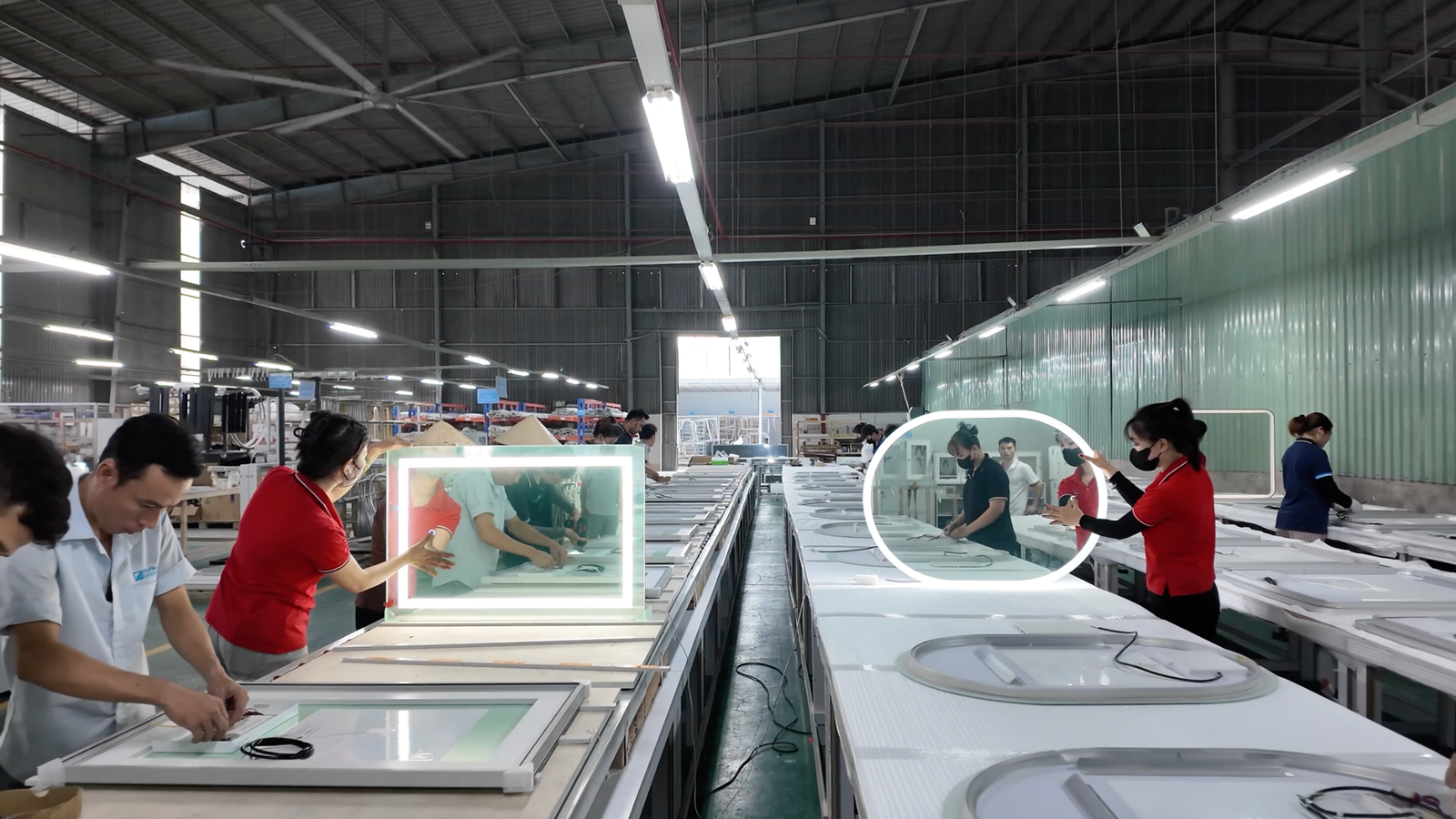
- How Manufacturers Conduct Pre-Shipment Inspections
- Packaging and Shipping Preparation
- A Pre-Shipment Quality Checklist for Buyers
- How to Choose the Right LED Bathroom Mirror Supplier
- FAQ
- Conclusion
Quick Answer: How to Verify LED Bathroom Mirror Quality Before Shipment
To verify LED bathroom mirror quality before shipment, inspect the mirror surface and edges, test the LED lighting and applicable electrical functions, confirm dimensions and accessories, and check the packaging. Compare finished products with the approved sample, technical specifications, and purchase order to identify discrepancies before dispatch. For bulk orders, agree on inspection methods and acceptance criteria in advance, and document any issues that require resolution.
Why Pre-Shipment Quality Control Matters for LED Bathroom Mirrors
Pre-shipment quality control is an important step in managing bulk orders of LED bathroom mirrors. Even when a product sample has been approved, buyers still need to verify that the finished products match the agreed requirements.
A structured inspection can help businesses:
- Identify visible defects: Detect scratches, chips, stains, uneven edges, and other surface imperfections before shipment.
- Verify product functionality: Check LED lighting and applicable electrical functions according to the product specifications.
- Confirm order accuracy: Ensure that dimensions, models, accessories, and quantities match the purchase order.
- Reduce shipping-related risks: Check whether products are adequately protected and packed for transportation.
- Improve supplier communication: Document discrepancies and agree on corrective actions before dispatch.
The inspection scope should be based on the approved sample, product specifications, purchase order, and any agreed quality requirements.
Pre-shipment inspection does not replace quality checks during production. Instead, it provides a final opportunity to identify visible defects, verify product functions, and confirm that finished mirrors match the approved specifications before dispatch. Checking quality at different production stages can help identify issues earlier and reduce the risk of products failing to meet agreed requirements.
Key Quality Checks for LED Bathroom Mirrors
Mirror Surface, Clarity, and Image Distortion
The mirror surface should be checked under suitable lighting conditions to identify visible scratches, chips, stains, spots, or other imperfections.
Buyers should also examine image clarity and look for noticeable distortion when viewing reflections from different positions. The reflection should be assessed under consistent viewing conditions, using the acceptance criteria agreed upon before production.
Key inspection points include:
- Visible scratches, chips, stains, or surface defects.
- Reflection clarity under suitable viewing conditions.
- Noticeable image distortion.
- Consistency of appearance across the inspected products.
- Visible damage around the mirror perimeter.

Acceptance criteria for surface defects and image distortion should be established for the specific product. Buyers should not assume that one universal tolerance applies to every mirror model.
LED Lighting Performance and Uniformity
LED lighting is a key functional component of an illuminated bathroom mirror. The lighting system should be tested according to the product's agreed specifications.
Check whether the lights turn on correctly, whether there are visibly dark sections or uneven illumination, and whether the lighting appearance is consistent across the inspected units.
Key inspection points include:
- LED lights turn on and operate as intended.
- No obvious flickering occurs during the agreed functional test.
- No visibly uneven illumination or unexpected dark areas are present.
- Lighting color and brightness meet the approved product specifications.
- Lighting controls operate correctly, where applicable.
Brightness, color temperature, and other measurable lighting requirements should be verified with appropriate instruments when specified. Visual inspection alone cannot confirm exact technical values.
Sensors, Switches, and Electrical Functions
Some LED bathroom mirrors include touch switches, motion sensors, dimming functions, or other electrical features. The applicable checks depend on the model ordered.
For mirrors with these features, verify that each included function responds correctly and consistently during testing.
The inspection may cover:
- Touch switches or other controls.
- Sensor response, where applicable.
- Dimming or color-adjustment functions, if included.
- Power connection and operation in accordance with the manufacturer's instructions.
- Electrical safety documentation and test records, where required by the order or destination market.
A functional check confirms whether a feature operates as expected during the test. It is not the same as a formal electrical safety assessment. Safety testing that requires specialized equipment should be conducted by qualified personnel using appropriate procedures.
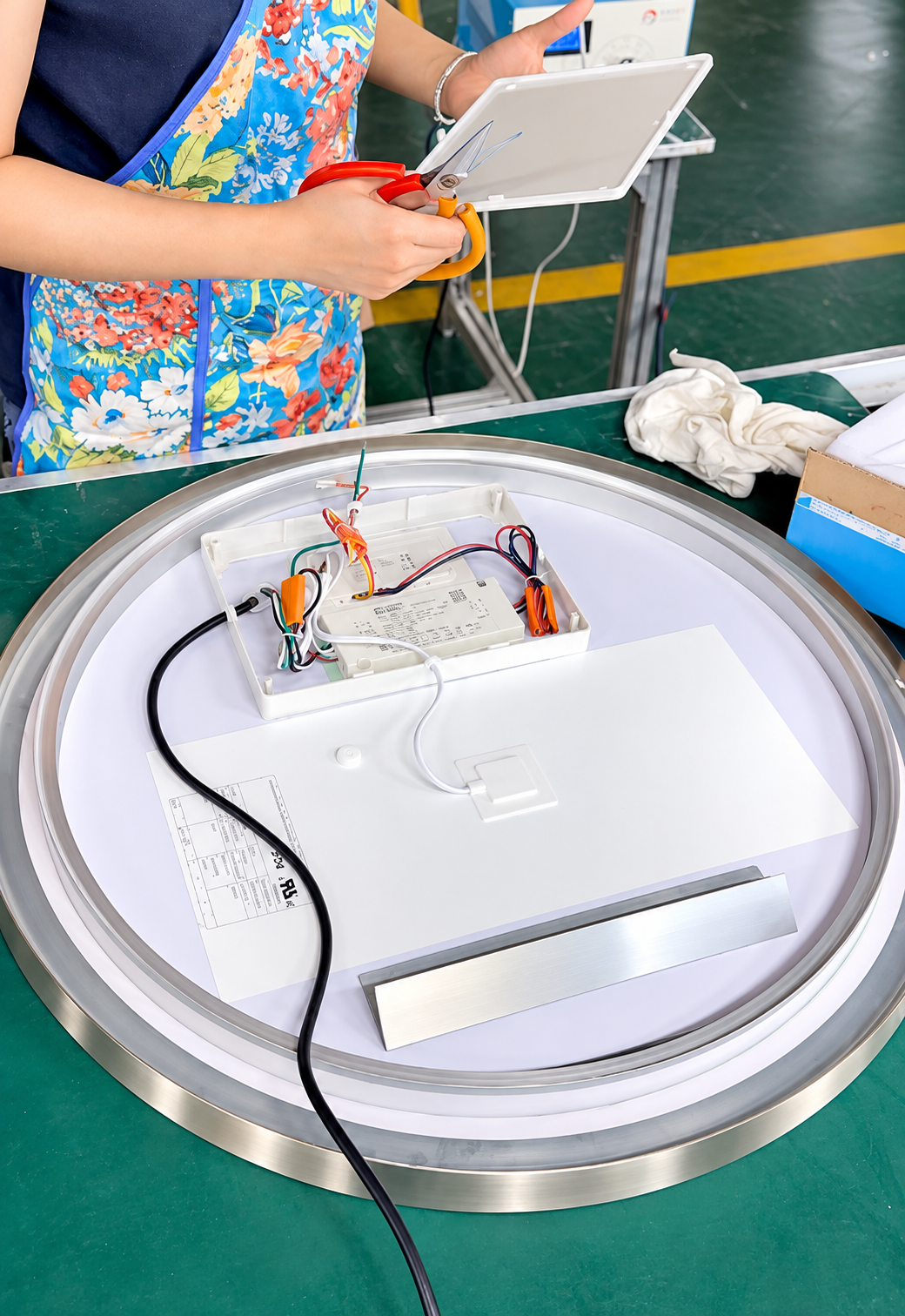
Only the components included in the specific model should be shown or described.
Frame, Edges, and Overall Finish
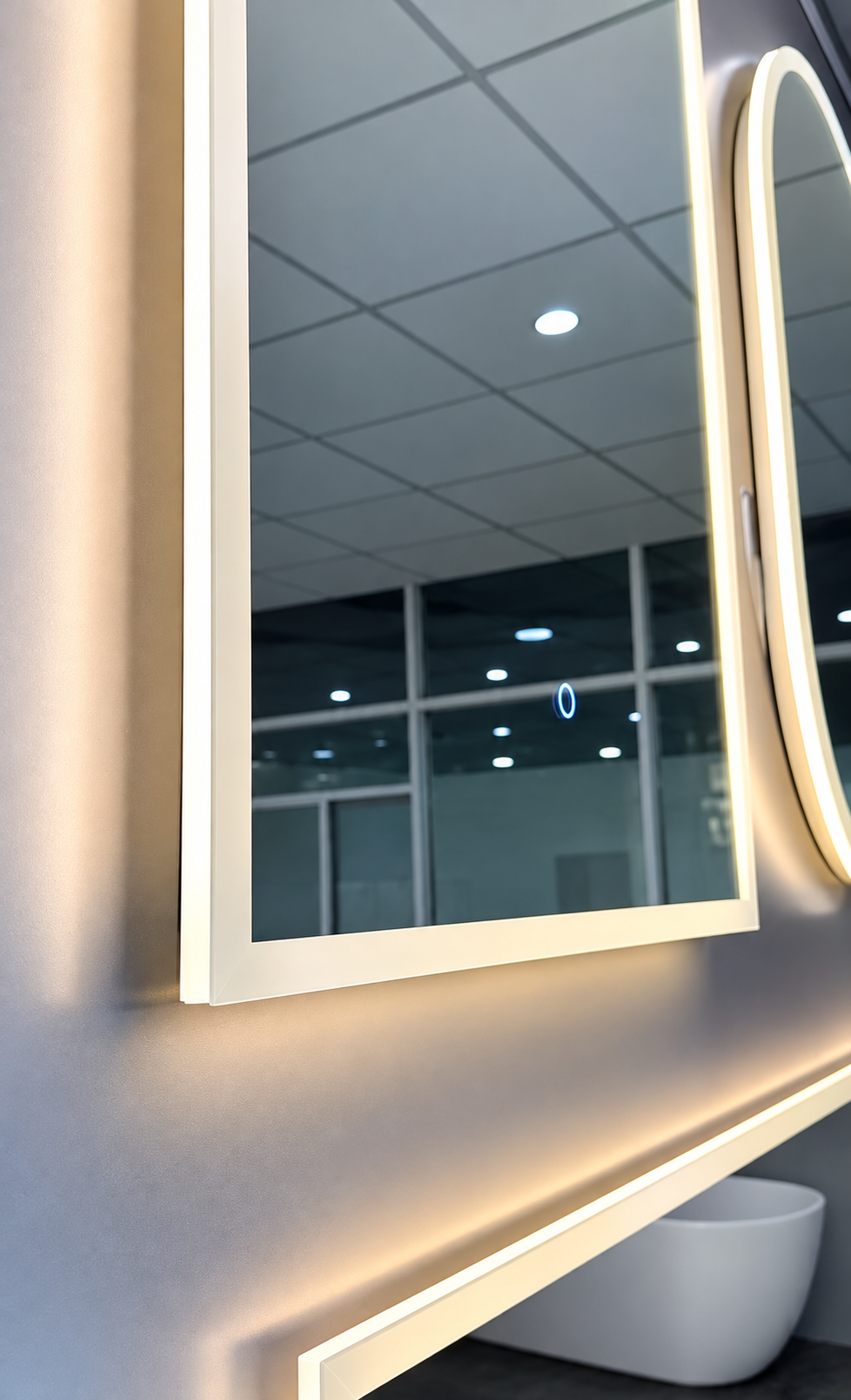
The frame and edges should be inspected for visible defects that could affect appearance, installation, or product durability.
For framed mirrors, check the frame alignment, finish, and visible joints. For frameless mirrors, pay particular attention to edge finishing and any visible chips or irregularities.
Check the following:
- Frame alignment and finish, if applicable.
- Smooth and consistent edge finishing.
- Visible chips, cracks, or damaged corners.
- Securely fitted components.
- Clean surfaces and an overall finish consistent with the approved sample.
Mounting hardware and installation points should also be checked against the approved drawings or installation requirements. Any visible damage or assembly issue should be documented and reviewed before shipment approval.
Dimensions, Accessories, and Order Specifications
A mirror can appear visually acceptable but still be unsuitable for the buyer if its dimensions, accessories, or configuration do not match the order.
Inspect the products against the latest approved specifications and purchase order.
Verify:
- Product model and item code.
- Length, width, thickness, and other specified dimensions.
- Quantity and product identification.
- Included mounting hardware and accessories.
- Electrical specifications and cable configuration, where applicable.
- Packaging labels and other agreed order requirements.
Measurements should be taken using suitable tools and compared with the agreed tolerances. Do not assume that all models share the same dimensions, accessories, or electrical configuration.
A simple document cross-check can help prevent errors:
| Item to Verify | Reference Document |
|---|---|
| Model and item code | Purchase order |
| Dimensions | Approved technical drawing |
| Lighting and electrical configuration | Product specification |
| Accessories | Approved order details |
| Packaging and labels | Agreed packing requirements |
This is a general inspection reference. The applicable documents and requirements depend on the specific order.
How Manufacturers Conduct Pre-Shipment Inspections
The exact inspection process varies by manufacturer, product model, order requirements, and agreed quality procedures. A practical pre-shipment inspection can be organized into several stages.
Review the Approved Specifications
Before inspecting finished products, the inspection team should review the purchase order, approved sample, technical drawings, product specifications, and agreed acceptance criteria.
This helps ensure that the inspection is based on the correct product version rather than an outdated specification.
Inspect Product Appearance
Inspect the mirror surface, edges, frame, assembly, and overall finish. Record visible defects and compare the product with the approved sample.
Test Applicable Functions
Test the LED lighting, switches, sensors, and other functions included in the specific model. Record any failures or inconsistencies that require further investigation.
Verify Dimensions and Accessories
Check specified dimensions, model identification, included accessories, and other order requirements. Any discrepancies should be documented for review.
Record Results and Resolve Issues
Inspection findings should be recorded clearly, with photographs or measurements where useful. If a product does not meet the agreed requirements, the buyer and manufacturer should determine the necessary corrective action before shipment.
An inspection record should identify the products or batches inspected, the checks performed, the findings, and any outstanding issues.
Confirm Shipment Readiness
Shipment readiness should be confirmed only after the applicable inspection requirements have been completed and issues requiring resolution have been addressed according to the agreed process.
What Documents Should Buyers Request?
The documents required before shipment depend on the product, purchase agreement, and destination market. Buyers should clarify documentation requirements with the supplier before production or dispatch.
Depending on the order, relevant documents may include:
- An inspection report, if available or agreed.
- The approved product specification or technical drawing.
- Applicable test records or compliance documents, where required.
- A packing list and product identification details.
Buyers should confirm which documents apply to their order rather than assume that every document is available for every mirror model.
Packaging and Shipping Preparation
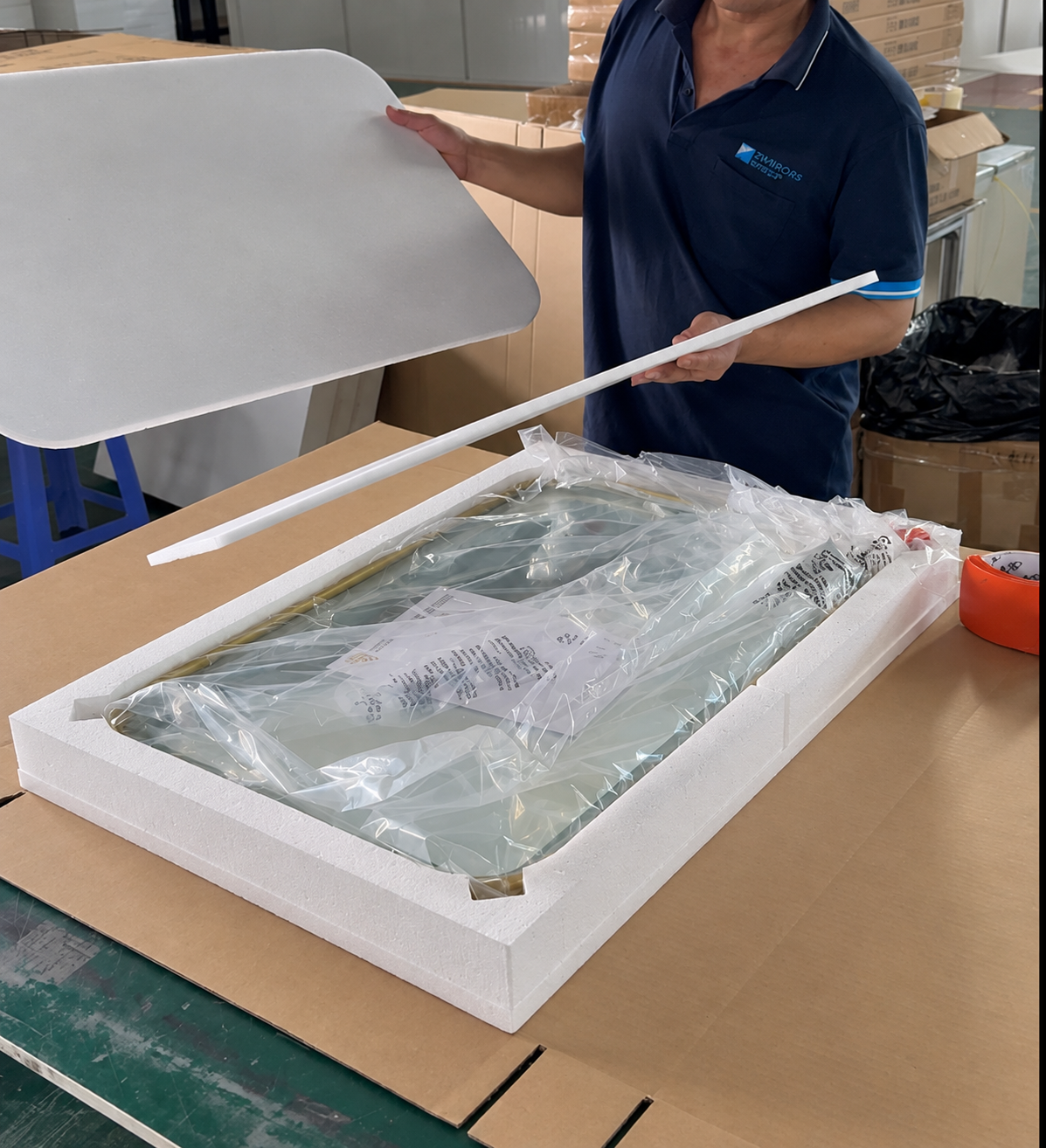
Even a well-manufactured mirror can be damaged if it is inadequately protected during handling and transportation. Packaging should therefore be checked as part of pre-shipment preparation.
Inspect Protective Materials
Check that the mirror is protected against scratches, impacts, and contact with hard surfaces. Corner and edge protection should be suitable for the product design and packaging method.
Check Internal Fixing and Cushioning
Protective inserts and cushioning should help prevent unnecessary movement inside the carton. The mirror and its components should remain adequately secured during normal handling.
Verify Carton Condition and Labels
Inspect cartons for visible damage, weak or open seams, and other issues that may compromise protection. Confirm that model labels, quantities, handling instructions, and shipping marks match the agreed requirements.
Confirm Packing Requirements
For bulk orders, buyers should confirm packaging specifications in advance, including individual product protection, carton configuration, and palletization requirements where applicable.
Packaging checks can reduce foreseeable transport risks, but they cannot guarantee that damage will never occur. The packaging method should be appropriate for the product and shipping conditions.
A Pre-Shipment Quality Checklist for Buyers
Buyers can use the following checklist when reviewing an LED bathroom mirror order before shipment. Adapt it to the specific product, purchase agreement, and inspection requirements.
| Inspection Category | What to Verify | Status | Remarks / Photo Reference |
|---|---|---|---|
| Mirror surface | Scratches, chips, stains, and visible defects | Pass / Fail / N/A | |
| Reflection | Clarity and noticeable image distortion | Pass / Fail / N/A | |
| LED lighting | Operation, visible uniformity, and agreed specifications | Pass / Fail / N/A | |
| Electrical functions | Switches, sensors, and other included functions | Pass / Fail / N/A | |
| Frame and edges | Alignment, finish, and edge condition | Pass / Fail / N/A | |
| Dimensions | Measurements against approved specifications | Pass / Fail / N/A | |
| Accessories | Mounting hardware and included components | Pass / Fail / N/A | |
| Order accuracy | Model, item code, quantity, and configuration | Pass / Fail / N/A | |
| Technical records | Required test records and documentation | Pass / Fail / N/A | |
| Packaging | Surface protection, cushioning, and carton condition | Pass / Fail / N/A | |
| Labels | Product identification and shipping marks | Pass / Fail / N/A | |
| Inspection records | Findings documented and outstanding issues addressed | Pass / Fail / N/A |
For each item, the acceptance criteria should be based on the approved specifications and requirements agreed upon for that order. Buyers and suppliers should also agree on the inspection sample size, how defects will be recorded, and who is responsible for approving shipment.
How to Choose the Right LED Bathroom Mirror Supplier
A clear inspection process starts with clear communication between the buyer and supplier. Before placing an order, buyers should confirm the selected model, dimensions, lighting configuration, included functions, accessories, packaging requirements, and applicable documentation.
It is also helpful to agree on how product discrepancies will be reported and resolved. Written specifications and an approved sample provide a shared reference for evaluating finished products and discussing any differences before dispatch.
ZW Mirrors offers a range of bathroom mirror products for buyers to explore. Reviewing available models alongside the approved specifications can help buyers identify options that fit their product and project requirements.
Explore the ZW Mirrors bathroom mirror collection to review available models.
FAQ
When should LED bathroom mirrors be inspected before shipment?
Pre-shipment inspection should take place at the stage agreed upon by the buyer and supplier, with sufficient time to address any identified issues before dispatch.
Can buyers rely on a visual inspection alone?
No. Visual inspection can identify appearance defects, but it cannot confirm every electrical, lighting, or dimensional requirement. Specialized measurements and electrical tests may be necessary depending on the product specifications.
What should buyers compare during a pre-shipment inspection?
Buyers should compare finished products with the approved sample, technical specifications, purchase order, and agreed acceptance criteria.
Should every LED bathroom mirror be tested before shipment?
The inspection method and sample size should be agreed upon in advance. The appropriate approach depends on the order, product requirements, risk level, and applicable quality procedures.
What happens if a mirror fails the inspection?
The discrepancy should be documented and communicated to the supplier. The buyer and supplier should agree on corrective action and any necessary reinspection before shipment approval.
What documents can buyers request before shipment?
Depending on the order, buyers may request an inspection report, approved specifications, relevant test records, or packing documentation. The required documents should be agreed upon with the supplier before shipment.
Conclusion
Verifying LED bathroom mirror quality before shipment helps buyers confirm that products meet the agreed requirements for appearance, functionality, dimensions, accessories, and packaging.
A clear checklist, documented inspection results, and agreed acceptance criteria can help importers and distributors manage quality risks and communicate more effectively with suppliers.
For businesses sourcing bathroom mirrors, the most reliable approach is to define product requirements early, verify them systematically, and resolve discrepancies before the order is dispatched.
Explore ZW Bathroom Mirrors
Explore our bathroom mirror collection or contact our team to discuss your product and project requirements.
Need help with your requirements? Contact our team